


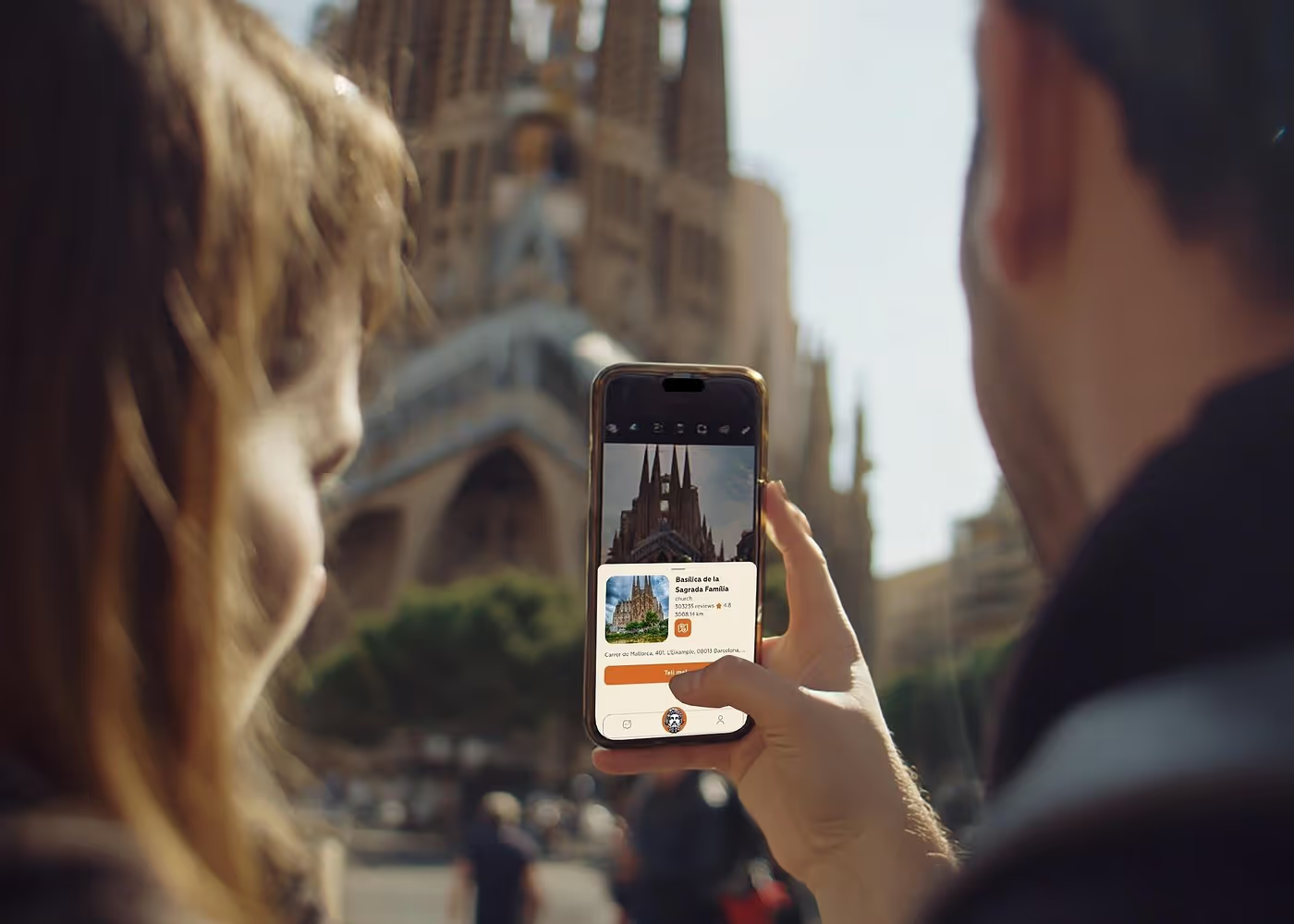
Standing in front of a crumbling stone archway in Rome or a weathered lighthouse on the Turkish Riviera, most travelers reach for their phones and open Google Lens. Within seconds, they get a name: “Arch of Constantine” or “Alanya Lighthouse.” But then, the experience stops. You get a link to a Wikipedia page or a shopping result for a postcard. In 2026, identification is no longer the challenge—understanding is.
While generic Large Language Models (LLMs) and visual search tools are getting faster, they frequently fail at the one thing travelers actually want: Context. Here is why a truly “intelligent” landmark history identifier needs more than just a camera to tell a great story.
O Dilema do Detalhe: Além da “Visão Geral”
Para ser justo, os identificadores de IA modernos são muito bons em reconhecer marcos mundialmente famosos como a Torre Eiffel, mesmo de uma foto borrada ou mal enquadrada. No entanto, as viagens no mundo real são sobre descobertas, não apenas sobre marcar silhuetas famosas. Muitas vezes ficamos curiosos com detalhes específicos de perto:
- Um único elemento: Por que esta coluna em particular é diferente do resto?
- Um detalhe oculto: O que significa o gesto específico da mão desta estátua?
- Uma visão fragmentada: Um entalhe interessante em uma parede, onde o resto do edifício está completamente fora do enquadramento.
Para um LLM genérico, essas fotos orientadas a detalhes são um beco sem saída. Como eles veem apenas um pedaço genérico de pedra ou uma coluna isolada, eles não conseguem conectá-lo à estrutura mais ampla. Sem a imagem visual completa, eles ou adivinham incorretamente ou fornecem fatos genéricos que parecem desconectados do elemento específico para o qual você está realmente olhando.
The Three Pillars of Advanced AI Identification
To solve the “Identification Gap,” a true AI historian—like Herodot AI—uses three specific pillars to ensure the story you hear is accurate, deep, and personal.
1. O Bloqueio Geoespacial (Integração de Mapas)
Pixels podem enganar. Uma foto de um farol genérico do século 19 pode ser em qualquer outro lugar, no Maine, na Cornualha ou em Alanya. Embora ferramentas como o Google Lens possam usar seu endereço IP ou localização GPS aproximada para restringir o continente ou a cidade, isso geralmente não é suficiente para uma identificação precisa em áreas históricas densas.
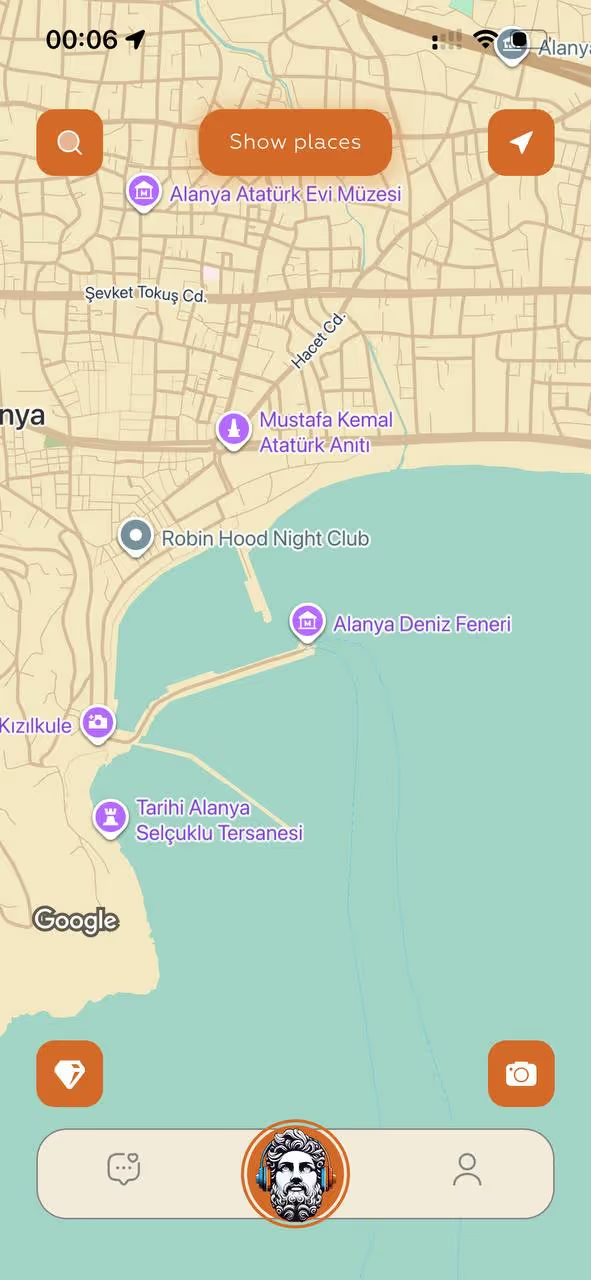
**A Solução:** Um identificador de ponta deve se integrar profundamente com o GPS ao vivo e as camadas do mapa, não apenas com as coordenadas aproximadas. Ao colocar você exatamente em um mapa detalhado, a IA entende o contexto espacial — o que está na sua frente, o que está atrás de você e quais edifícios são adjacentes. Ela cruza o campo de visão da câmera com os pontos de referência no mapa. Esse Bloqueio Geoespacial significa que, mesmo que sua foto esteja borrada ou parcial, a IA sabe exatamente o que você está olhando porque entende todos os seus arredores.
2. Narrative Continuity: The “Memory” Advantage
For great image recognition some context knowledge is essential. Understanding of what is on photo can be much easier for LLM if it knows, what has been seen and discussed before you snapped.
The Herodot AI Difference: Herodot maintains a Narrative Thread. If you’ve spent the morning exploring the Tower of London, Herodot stays “in character.” When you snap a photo of a small, nondescript iron gate, it doesn’t just say “Iron Gate.” It understands that this gate is likely part of the specific historical prison complex you’ve been discussing. It remembers your interests—if you like military history, it focuses on the gate’s defenses; if you like ghost stories, it tells you who was last seen passing through it.
3. From Wikipedia Facts to Immersive Folklore
Most AI identifiers act like a digital textbook. They provide a list of dates, architects, and dimensions. But travel is about feeling the weight of history, not memorizing a spreadsheet.
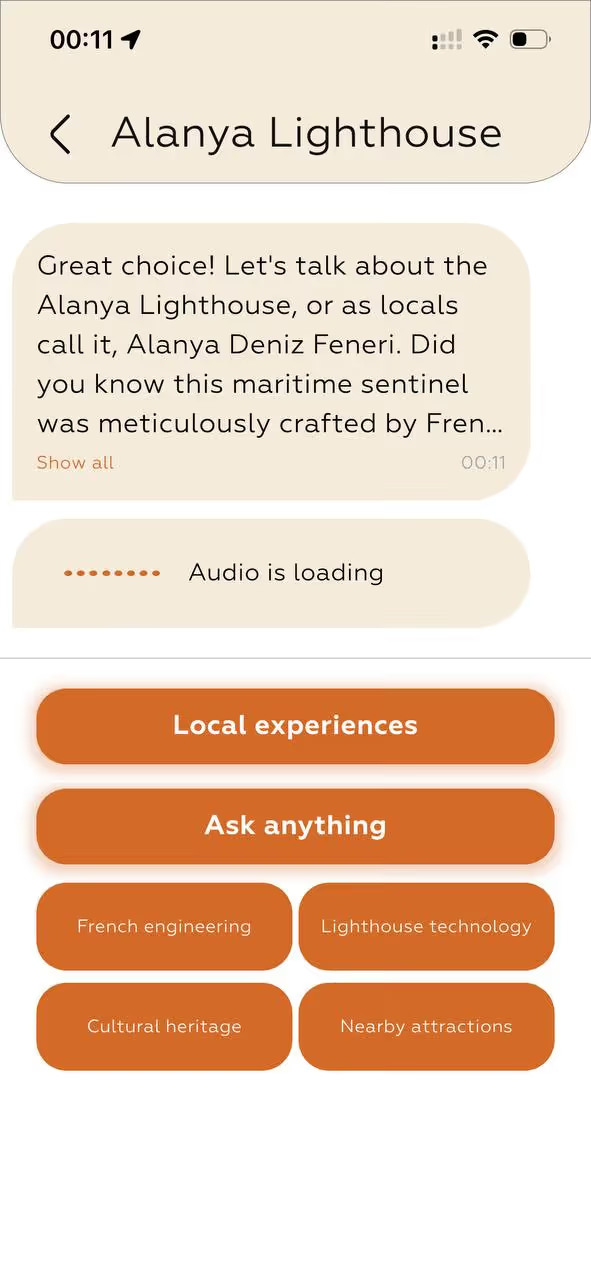
The Herodot AI Difference: We believe a landmark identifier should be a Storyteller, not a Database. Herodot takes the identified landmark and uses it as a stage. Instead of saying, "This tower was built in 1226," Herodot tells you, "Imagine the sound of the Mediterranean 800 years ago, as the Seljuk guards watched from this very balcony..." By combining high-fidelity audio with evocative narrative styles, it transforms a visual search into an emotional experience.
Comparison: Contextual AI vs. Generic Visual Search
| Feature | Generic LLM / Google Lens | Herodot AI (Contextual) |
|---|---|---|
| Identification Logic | Correspondência de pixels + local aprox. | Visual + GPS + Map Context |
| Handling Bad Photos | Dificuldades com fotos borradas/parciais | High accuracy via Map-verification |
| Accuracy on "Generic" Sites | Baixa (Frequentemente adivinha/alucina) | Verified by Location Lock |
| Historical Memory | Nenhuma (Baseada na sessão) | Persistent Narrative Thread |
| Output Type | Links de busca ou listas curtas | Immersive Audio Stories |
Conclusion: Don’t Just Identify—Understand
In an age where we can search for anything, the real luxury is understanding. Don’t settle for a tool that just gives you a Wikipedia link. Choose an identifier that understands the map, remembers your story, and speaks to you like a historian.
Ready to turn your camera into a personal historian? Try Herodot AI and turn every photo into a story.