


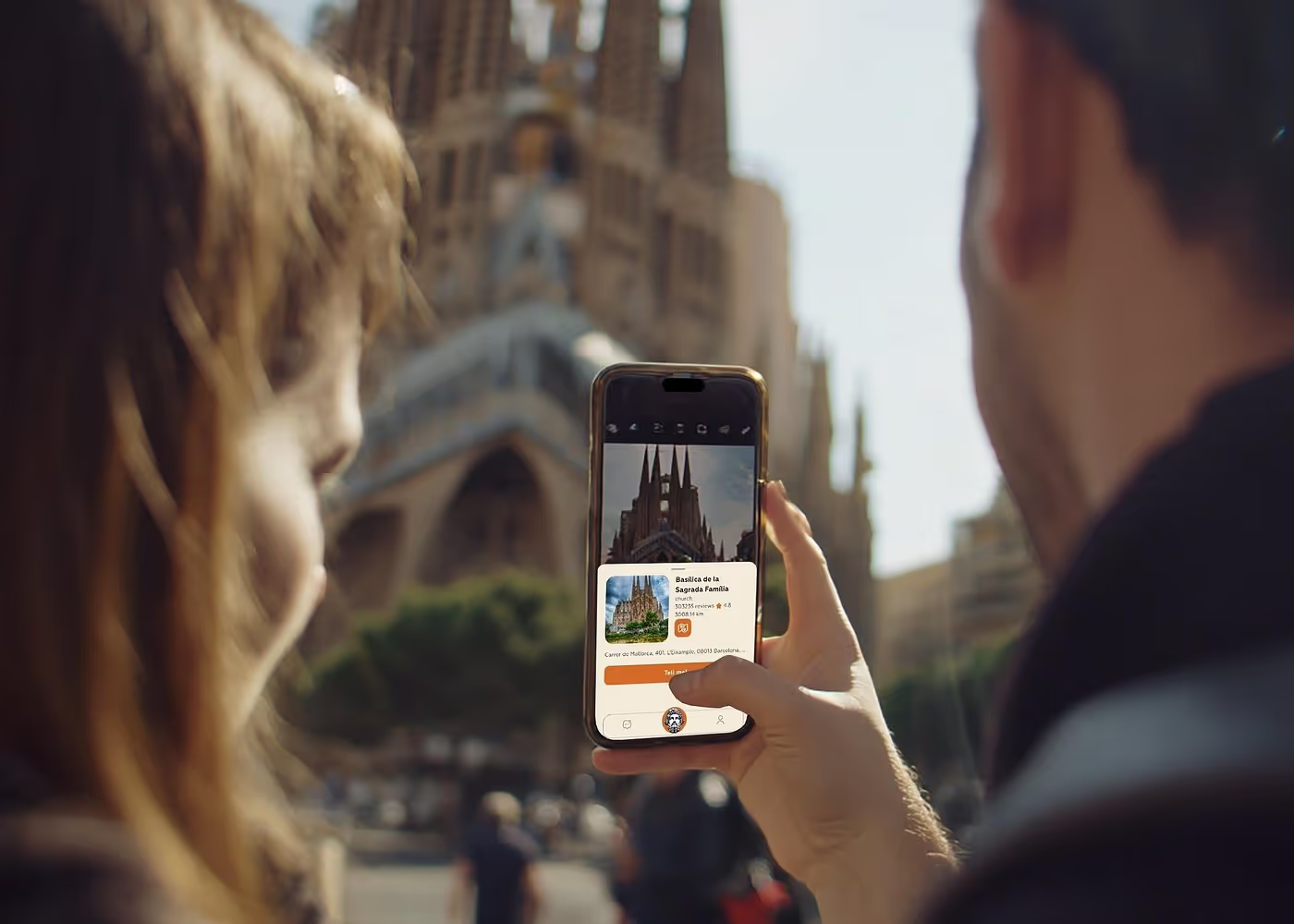
Standing in front of a crumbling stone archway in Rome or a weathered lighthouse on the Turkish Riviera, most travelers reach for their phones and open Google Lens. Within seconds, they get a name: “Arch of Constantine” or “Alanya Lighthouse.” But then, the experience stops. You get a link to a Wikipedia page or a shopping result for a postcard. In 2026, identification is no longer the challenge—understanding is.
While generic Large Language Models (LLMs) and visual search tools are getting faster, they frequently fail at the one thing travelers actually want: Context. Here is why a truly “intelligent” landmark history identifier needs more than just a camera to tell a great story.
The Detail Dilemma: Beyond the “Big Picture”
To be fair, modern AI identifiers are quite good at recognizing world-famous landmarks like the Eiffel Tower, even from a blurry or poorly framed photo. However, real-world travel is about discovery, not just checking off famous silhouettes. We often get curious about specific, up-close details:
- A single element: Why is this particular column different from the rest?
- A hidden detail: What does the specific hand gesture of this statue mean?
- A fragmented view: An interesting carving on a wall, where the rest of the building is completely out of frame.

For a generic LLM, these detail-oriented photos are a dead end. Because they only see a generic piece of stone or an isolated column, they fail to connect it to the broader structure. Without the full visual picture, they either guess incorrectly or provide generic facts that feel disconnected from the specific element you are actually looking at.
The Three Pillars of Advanced AI Identification
To solve the “Identification Gap,” a true AI historian—like Herodot AI—uses three specific pillars to ensure the story you hear is accurate, deep, and personal.
1. The Geospatial Lock (Map Integration)
Pixels can be deceiving. A photo of a generic 19th-century lighthouse could be elsewhere, in Maine, Cornwall, or Alanya. While tools like Google Lens may use your IP address or approximate GPS location to narrow down the continent or city, this is often not enough for precise identification in dense historical areas.
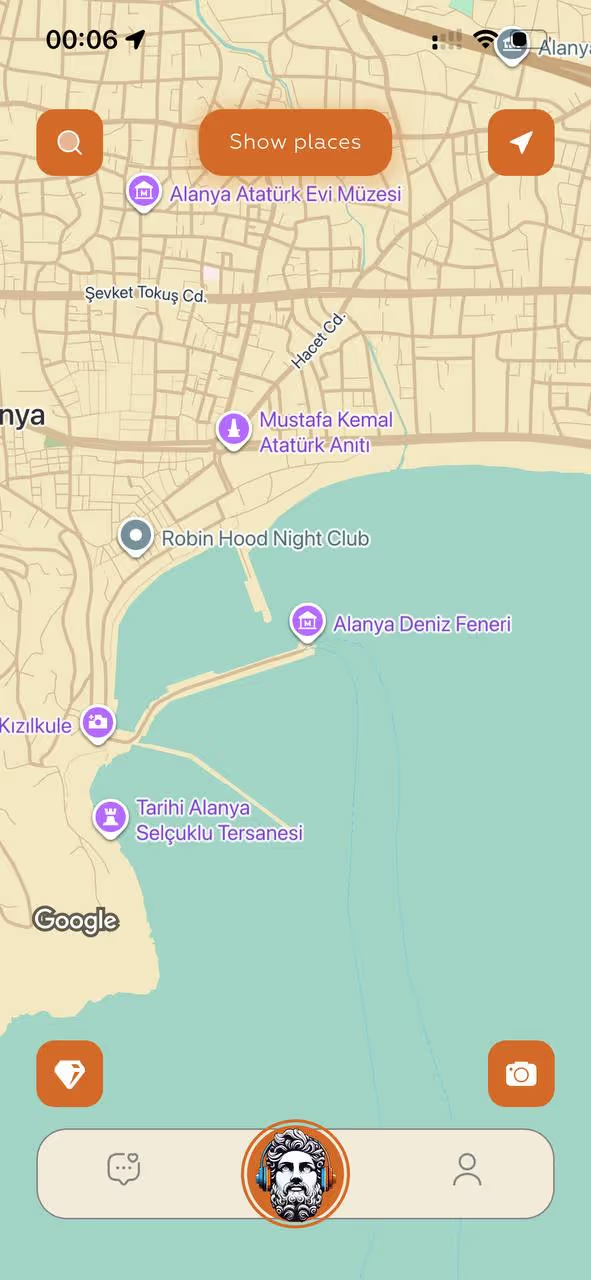
The Solution: A high-end identifier must integrate deeply with live GPS and map layers, not just approximate coordinates. By placing you exactly on a detailed map, the AI understands the spatial context—what is in front of you, what is behind you, and what buildings are adjacent. It cross-references the camera's field of view with the landmarks on the map. This Geospatial Lock means that even if your photo is blurry or partial, the AI knows exactly what you are looking at because it understands your full surroundings.
2. Narrative Continuity: The “Memory” Advantage
For great image recognition some context knowledge is essential. Understanding of what is on photo can be much easier for LLM if it knows, what has been seen and discussed before you snapped.
The Herodot AI Difference: Herodot maintains a Narrative Thread. If you’ve spent the morning exploring the Tower of London, Herodot stays “in character.” When you snap a photo of a small, nondescript iron gate, it doesn’t just say “Iron Gate.” It understands that this gate is likely part of the specific historical prison complex you’ve been discussing. It remembers your interests—if you like military history, it focuses on the gate’s defenses; if you like ghost stories, it tells you who was last seen passing through it.
3. From Wikipedia Facts to Immersive Folklore
Most AI identifiers act like a digital textbook. They provide a list of dates, architects, and dimensions. But travel is about feeling the weight of history, not memorizing a spreadsheet.
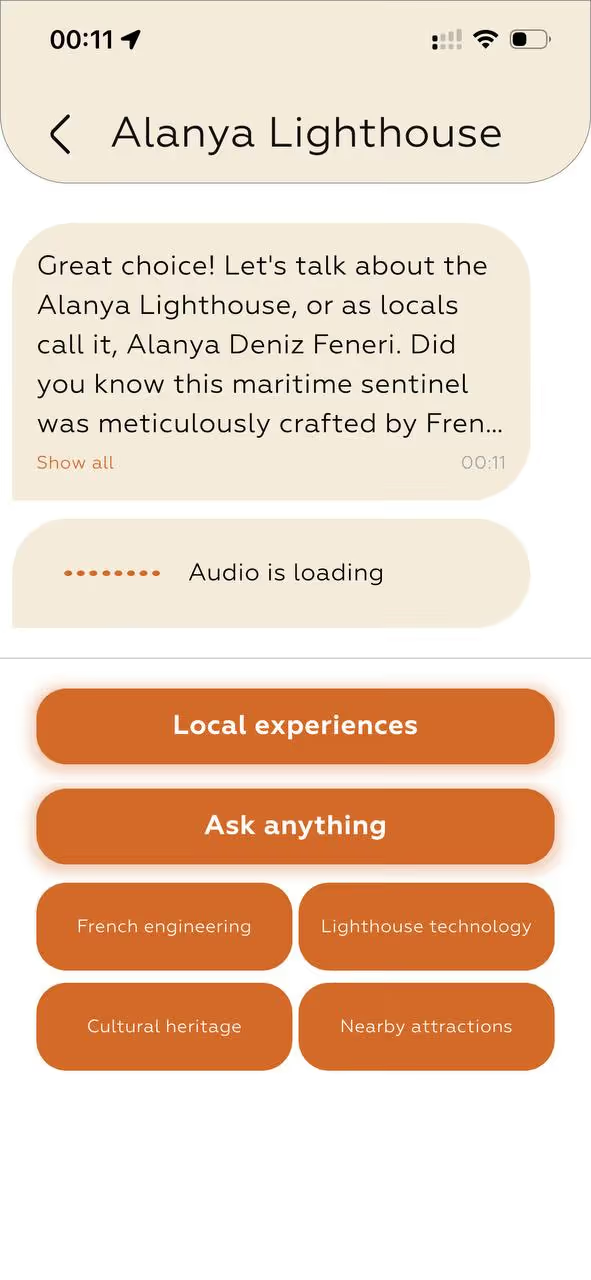
The Herodot AI Difference: We believe a landmark identifier should be a Storyteller, not a Database. Herodot takes the identified landmark and uses it as a stage. Instead of saying, "This tower was built in 1226," Herodot tells you, "Imagine the sound of the Mediterranean 800 years ago, as the Seljuk guards watched from this very balcony..." By combining high-fidelity audio with evocative narrative styles, it transforms a visual search into an emotional experience.
Comparison: Contextual AI vs. Generic Visual Search
| Feature | Generic LLM / Google Lens | Herodot AI (Contextual) |
|---|---|---|
| Identification Logic | Pixel matching + approx location | Visual + GPS + Map Context |
| Handling Bad Photos | Struggles with blurry/partial shots | High accuracy via Map-verification |
| Accuracy on "Generic" Sites | Low (Often guesses/hallucinates) | Verified by Location Lock |
| Historical Memory | None (Session-based) | Persistent Narrative Thread |
| Output Type | Search links or short fact lists | Immersive Audio Stories |
Conclusion: Don’t Just Identify—Understand
In an age where we can search for anything, the real luxury is understanding. Don’t settle for a tool that just gives you a Wikipedia link. Choose an identifier that understands the map, remembers your story, and speaks to you like a historian.
Ready to turn your camera into a personal historian? Try Herodot AI and turn every photo into a story.