


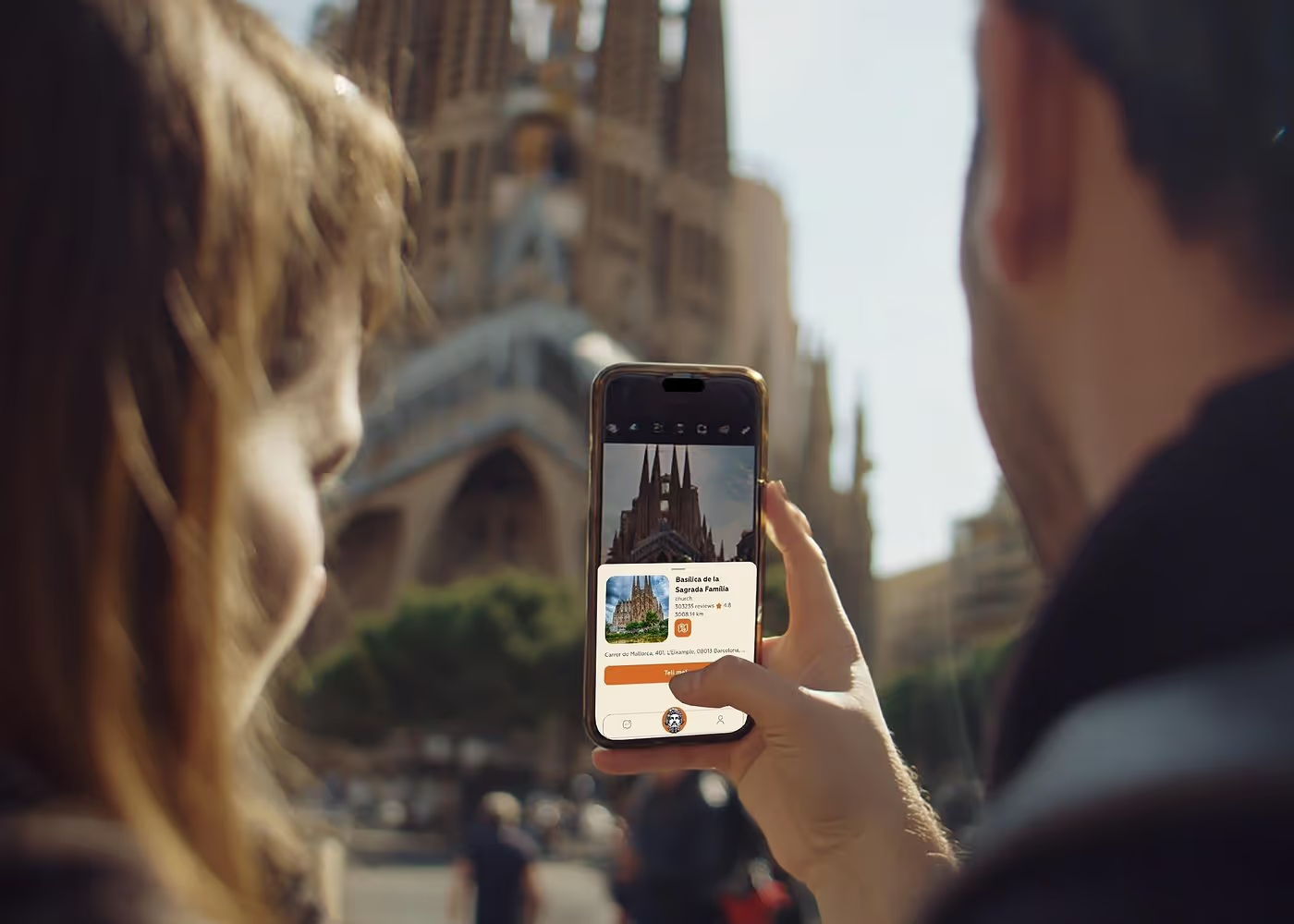
Standing in front of a crumbling stone archway in Rome or a weathered lighthouse on the Turkish Riviera, most travelers reach for their phones and open Google Lens. Within seconds, they get a name: “Arch of Constantine” or “Alanya Lighthouse.” But then, the experience stops. You get a link to a Wikipedia page or a shopping result for a postcard. In 2026, identification is no longer the challenge—understanding is.
While generic Large Language Models (LLMs) and visual search tools are getting faster, they frequently fail at the one thing travelers actually want: Context. Here is why a truly “intelligent” landmark history identifier needs more than just a camera to tell a great story.
El Dilema del Detalle: Más Allá de la “Perspectiva General”
Para ser justos, los identificadores de IA modernos son bastante buenos para reconocer monumentos mundialmente famosos como la Torre Eiffel, incluso en una foto borrosa o mal encuadrada. Sin embargo, los viajes en el mundo real tratan de descubrimientos, no solo de marcar siluetas famosas. A menudo nos da curiosidad por detalles específicos de cerca:
- Un solo elemento: ¿Por qué esta columna en particular es diferente del resto?
- Un detalle oculto: ¿Qué significa el gesto específico de la mano de esta estatua?
- Una vista fragmentada: Una talla interesante en una pared, donde el resto del edificio está completamente fuera de encuadre.
Para un LLM genérico, estas fotos orientadas a los detalles son un callejón sin salida. Debido a que solo ven un trozo de piedra genérico o una columna aislada, no logran conectarlo con la estructura más amplia. Sin la imagen visual completa, o adivinan incorrectamente o proporcionan hechos genéricos que se sienten desconectados del elemento específico que estás mirando en realidad.
The Three Pillars of Advanced AI Identification
To solve the “Identification Gap,” a true AI historian—like Herodot AI—uses three specific pillars to ensure the story you hear is accurate, deep, and personal.
1. El Bloqueo Geoespacial (Integración de Mapas)
Los píxeles pueden engañar. Una foto de un faro genérico del siglo XIX podría estar en cualquier otro lugar, en Maine, Cornualles o Alanya. Si bien herramientas como Google Lens pueden usar tu dirección IP o ubicación GPS aproximada para reducir el continente o la ciudad, esto a menudo no es suficiente para una identificación precisa en áreas históricas densas.
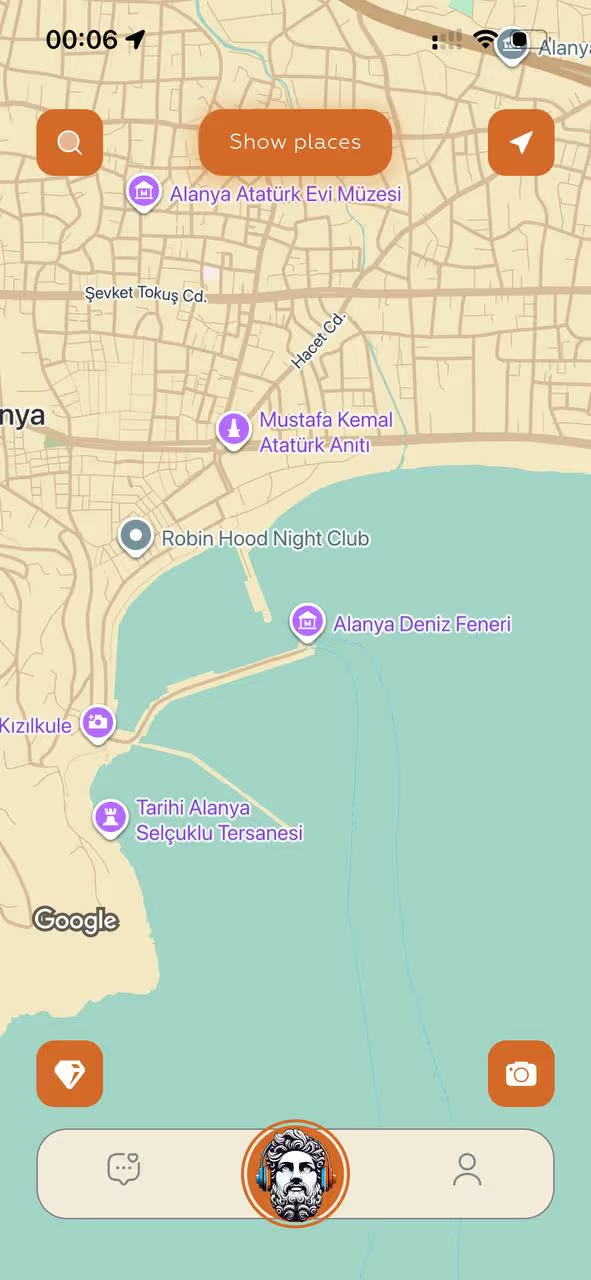
**La Solución:** Un identificador de alta gama debe integrarse profundamente con capas de mapas y GPS en vivo, no solo con coordenadas aproximadas. Al ubicarte exactamente en un mapa detallado, la IA comprende el contexto espacial: qué hay frente a ti, qué hay detrás de ti y qué edificios son adyacentes. Cruza el campo de visión de la cámara con los puntos de referencia en el mapa. Este Bloqueo Geoespacial significa que incluso si tu foto está borrosa o es parcial, la IA sabe exactamente lo que estás mirando porque comprende todo tu entorno.
2. Narrative Continuity: The “Memory” Advantage
For great image recognition some context knowledge is essential. Understanding of what is on photo can be much easier for LLM if it knows, what has been seen and discussed before you snapped.
The Herodot AI Difference: Herodot maintains a Narrative Thread. If you’ve spent the morning exploring the Tower of London, Herodot stays “in character.” When you snap a photo of a small, nondescript iron gate, it doesn’t just say “Iron Gate.” It understands that this gate is likely part of the specific historical prison complex you’ve been discussing. It remembers your interests—if you like military history, it focuses on the gate’s defenses; if you like ghost stories, it tells you who was last seen passing through it.
3. From Wikipedia Facts to Immersive Folklore
Most AI identifiers act like a digital textbook. They provide a list of dates, architects, and dimensions. But travel is about feeling the weight of history, not memorizing a spreadsheet.
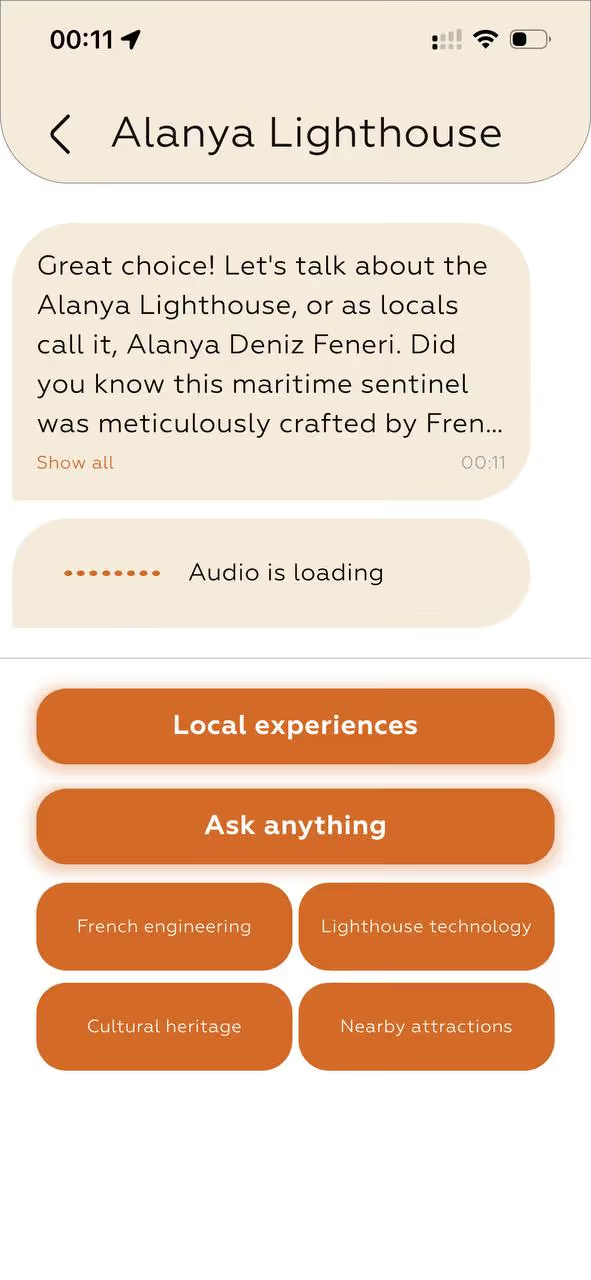
The Herodot AI Difference: We believe a landmark identifier should be a Storyteller, not a Database. Herodot takes the identified landmark and uses it as a stage. Instead of saying, "This tower was built in 1226," Herodot tells you, "Imagine the sound of the Mediterranean 800 years ago, as the Seljuk guards watched from this very balcony..." By combining high-fidelity audio with evocative narrative styles, it transforms a visual search into an emotional experience.
Comparison: Contextual AI vs. Generic Visual Search
| Feature | Generic LLM / Google Lens | Herodot AI (Contextual) |
|---|---|---|
| Identification Logic | Coincidencia de píxeles + ubicación aprox. | Visual + GPS + Map Context |
| Handling Bad Photos | Dificultades con fotos borrosas/parciales | High accuracy via Map-verification |
| Accuracy on "Generic" Sites | Baja (A menudo adivina/alucina) | Verified by Location Lock |
| Historical Memory | Ninguna (Basada en la sesión) | Persistent Narrative Thread |
| Output Type | Enlaces de búsqueda o listas breves | Immersive Audio Stories |
Conclusion: Don’t Just Identify—Understand
In an age where we can search for anything, the real luxury is understanding. Don’t settle for a tool that just gives you a Wikipedia link. Choose an identifier that understands the map, remembers your story, and speaks to you like a historian.
Ready to turn your camera into a personal historian? Try Herodot AI and turn every photo into a story.