


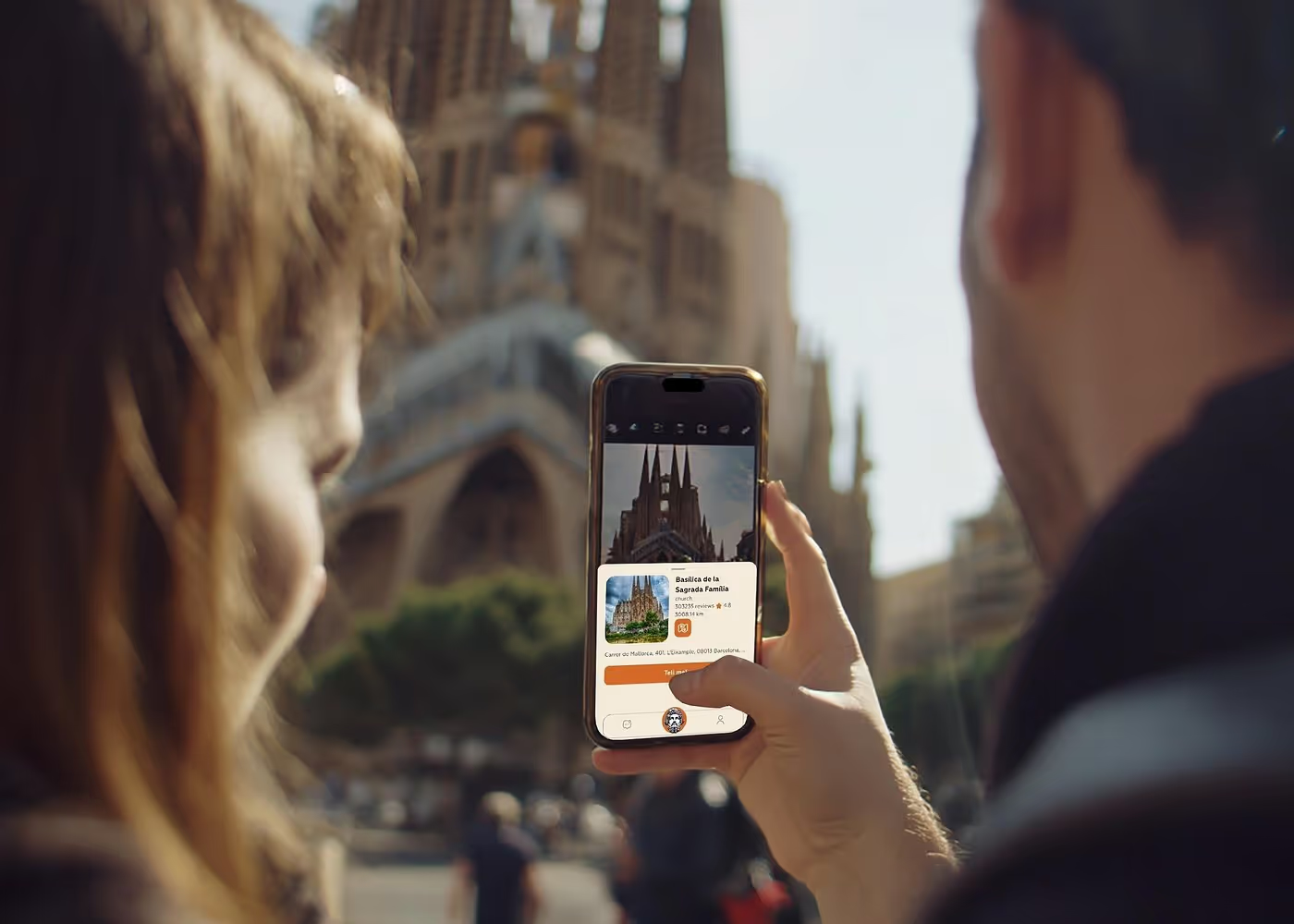
Standing in front of a crumbling stone archway in Rome or a weathered lighthouse on the Turkish Riviera, most travelers reach for their phones and open Google Lens. Within seconds, they get a name: “Arch of Constantine” or “Alanya Lighthouse.” But then, the experience stops. You get a link to a Wikipedia page or a shopping result for a postcard. In 2026, identification is no longer the challenge—understanding is.
While generic Large Language Models (LLMs) and visual search tools are getting faster, they frequently fail at the one thing travelers actually want: Context. Here is why a truly “intelligent” landmark history identifier needs more than just a camera to tell a great story.
Thế tiến thoái lưỡng nan của chi tiết: Vượt ra ngoài “Bức tranh lớn”
Công bằng mà nói, các công cụ nhận dạng AI hiện đại khá giỏi trong việc nhận ra các địa danh nổi tiếng thế giới như Tháp Eiffel, ngay cả từ một bức ảnh mờ hoặc khung hình kém. Tuy nhiên, du lịch trong thế giới thực là về sự khám phá, không chỉ là đánh dấu những bóng hình nổi tiếng. Chúng ta thường tò mò về những chi tiết cụ thể, cận cảnh:
- Một yếu tố duy nhất: Tại sao cột đặc biệt này lại khác với phần còn lại?
- Một chi tiết ẩn: Cử chỉ tay cụ thể của bức tượng này có ý nghĩa gì?
- Một góc nhìn bị phân mảnh: Một hình chạm khắc thú vị trên tường, nơi phần còn lại của tòa nhà hoàn toàn nằm ngoài khung hình.
Đối với một LLM chung chung, những bức ảnh hướng đến chi tiết này là một ngõ cụt. Vì chúng chỉ nhìn thấy một mảnh đá chung chung hoặc một cột bị cô lập, chúng không thể kết nối nó với cấu trúc rộng lớn hơn. Nếu không có bức tranh hình ảnh đầy đủ, chúng đoán sai hoặc cung cấp các sự kiện chung chung có cảm giác bị ngắt kết nối với yếu tố cụ thể mà bạn đang thực sự nhìn vào.
The Three Pillars of Advanced AI Identification
To solve the “Identification Gap,” a true AI historian—like Herodot AI—uses three specific pillars to ensure the story you hear is accurate, deep, and personal.
1. Khóa Không Gian Địa Lý (Tích Hợp Bản Đồ)
Các pixel có thể bị lừa dối. Bức ảnh của một ngọn hải đăng chung chung ở thế kỷ 19 có thể ở một nơi khác, ở Maine, Cornwall hoặc Alanya. Mặc dù các công cụ như Google Lens có thể sử dụng địa chỉ IP hoặc vị trí GPS gần đúng của bạn để thu hẹp lục địa hoặc thành phố, nhưng điều này thường không đủ để nhận dạng chính xác trong các khu vực lịch sử đông đúc.
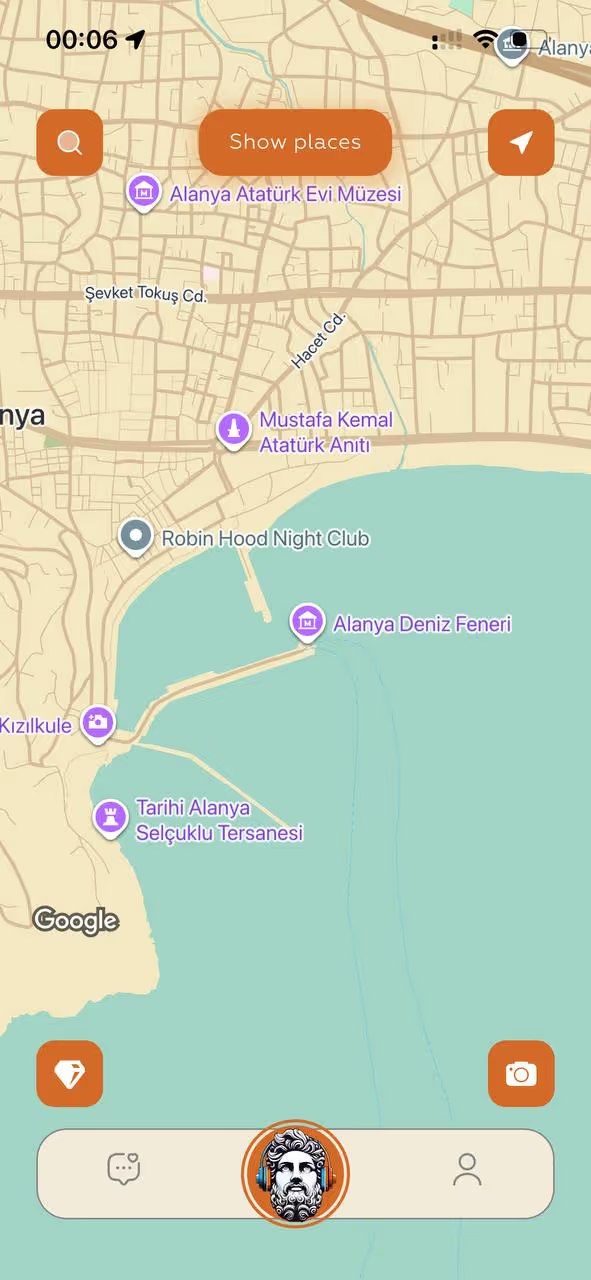
**Giải pháp:** Một trình nhận dạng cao cấp phải tích hợp sâu với các lớp bản đồ và GPS trực tiếp, chứ không chỉ các tọa độ gần đúng. Bằng cách đặt bạn chính xác trên một bản đồ chi tiết, AI hiểu bối cảnh không gian — những gì trước mặt bạn, những gì đằng sau bạn và những tòa nhà liền kề. Nó tham chiếu chéo trường nhìn của máy ảnh với các mốc trên bản đồ. Khóa không gian địa lý này có nghĩa là ngay cả khi ảnh của bạn bị mờ hoặc một phần, AI biết chính xác những gì bạn đang nhìn vì nó hiểu đầy đủ môi trường xung quanh bạn.
2. Narrative Continuity: The “Memory” Advantage
For great image recognition some context knowledge is essential. Understanding of what is on photo can be much easier for LLM if it knows, what has been seen and discussed before you snapped.
The Herodot AI Difference: Herodot maintains a Narrative Thread. If you’ve spent the morning exploring the Tower of London, Herodot stays “in character.” When you snap a photo of a small, nondescript iron gate, it doesn’t just say “Iron Gate.” It understands that this gate is likely part of the specific historical prison complex you’ve been discussing. It remembers your interests—if you like military history, it focuses on the gate’s defenses; if you like ghost stories, it tells you who was last seen passing through it.
3. From Wikipedia Facts to Immersive Folklore
Most AI identifiers act like a digital textbook. They provide a list of dates, architects, and dimensions. But travel is about feeling the weight of history, not memorizing a spreadsheet.
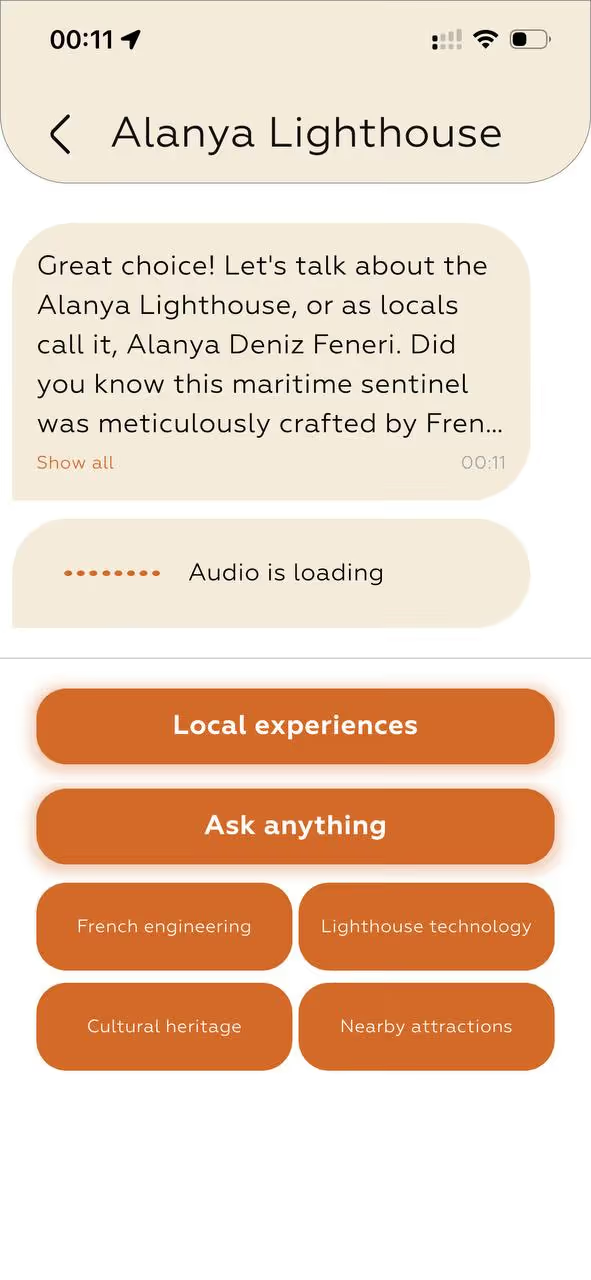
The Herodot AI Difference: We believe a landmark identifier should be a Storyteller, not a Database. Herodot takes the identified landmark and uses it as a stage. Instead of saying, "This tower was built in 1226," Herodot tells you, "Imagine the sound of the Mediterranean 800 years ago, as the Seljuk guards watched from this very balcony..." By combining high-fidelity audio with evocative narrative styles, it transforms a visual search into an emotional experience.
Comparison: Contextual AI vs. Generic Visual Search
| Feature | Generic LLM / Google Lens | Herodot AI (Contextual) |
|---|---|---|
| Identification Logic | Khớp pixel + vị trí gần đúng | Visual + GPS + Map Context |
| Handling Bad Photos | Khó khăn với các bức ảnh mờ/một phần | High accuracy via Map-verification |
| Accuracy on "Generic" Sites | Thấp (Thường đoán/ảo giác) | Verified by Location Lock |
| Historical Memory | Không (Dựa trên phiên) | Persistent Narrative Thread |
| Output Type | Liên kết tìm kiếm hoặc danh sách sự kiện ngắn | Immersive Audio Stories |
Conclusion: Don’t Just Identify—Understand
In an age where we can search for anything, the real luxury is understanding. Don’t settle for a tool that just gives you a Wikipedia link. Choose an identifier that understands the map, remembers your story, and speaks to you like a historian.
Ready to turn your camera into a personal historian? Try Herodot AI and turn every photo into a story.