
The four figures
Beside the upper dial stand Vanity with a mirror, the Miser with his purse, Death as a skeleton with a bell and hourglass, and a Turk with a lute. When Death rings, the others shake their heads.
The crowd gathers, the skeleton rings its bell, the Apostles appear, and forty seconds later it is over. Herodot AI tells you what you just saw, how to read the dials, and the stories of the square around you.
Wait for the hour, watch the Apostles, then ask “Is it true they blinded the clockmaker?”. This is the kind of story you hear:
Every Prague guide tells it: the city councillors were so proud of their clock that they had its maker, Master Hanuš, blinded, so he could never build a finer one for another town. Blind and bitter, Hanuš climbed into the mechanism, reached into the gears, and the clock stopped for years.
It is a wonderful story, and almost certainly not true. The clock was made around 1410 by Mikuláš of Kadaň; Hanuš only repaired it some eighty years later, and nobody recorded any blinding. The legend was a 16th-century mix-up that stuck. What is true: the skeleton has been ringing for centuries, and the clock still keeps Old Bohemian time, with the day beginning at sunset.
Get Herodot AI · iPhone and Android
The clock on the tower of the Old Town Hall was made in 1410 by the clockmaker Mikuláš of Kadaň with the astronomer Jan Šindel. It is the oldest astronomical clock in the world still working. The upper dial shows the time three ways, including Old Bohemian time counted from sunset, as well as the position of the sun and moon in the zodiac; the lower calendar dial, painted by Josef Mánes in 1866, shows the months and saints’ days. The Apostles were added in later centuries, and the clock was badly burnt in the Prague Uprising of May 1945 and rebuilt.
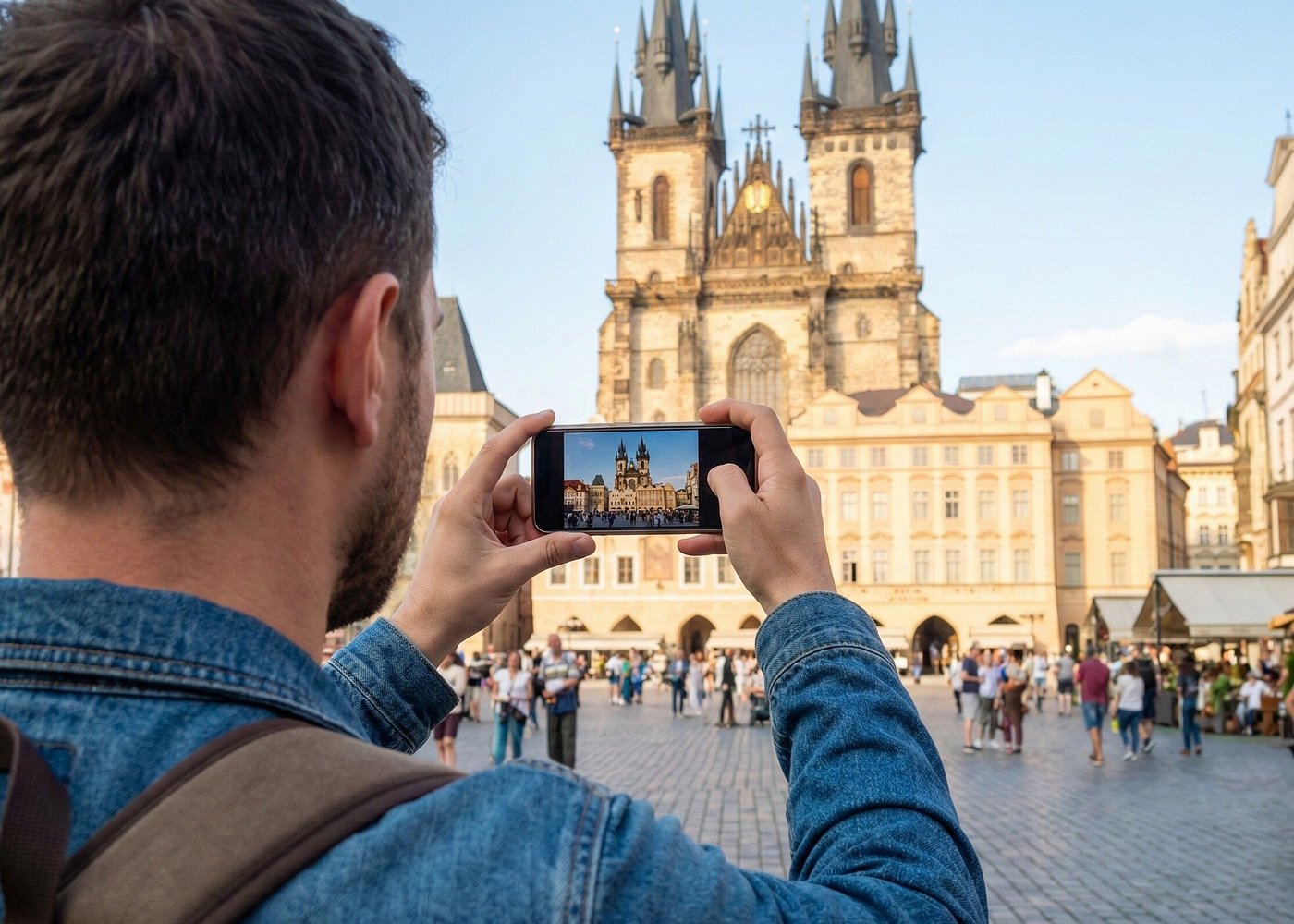
Old Town Square around it has been Prague’s market place since the 12th century. The twin Gothic towers of the Týn Church rise over the houses; the Jan Hus Memorial stands in the middle; and 27 white crosses in the paving by the town hall mark the Protestant leaders executed here on 21 June 1621.
Beside the upper dial stand Vanity with a mirror, the Miser with his purse, Death as a skeleton with a bell and hourglass, and a Turk with a lute. When Death rings, the others shake their heads.
Climb or take the lift to the gallery for the best view of the square, the Týn towers and the castle in the distance.
The towers are about 80 metres high and not identical: the thicker one is nicknamed Adam, the slimmer one Eve. The astronomer Tycho Brahe is buried inside.
Set in the paving at the foot of the tower, they recall the Bohemian nobles and burghers beheaded after the Battle of White Mountain.
Ask it anything on the spot, for example:
Get Herodot AI · iPhone and Android


No route, no numbered stops
Herodot AI is not a fixed-stop audioguide. It knows the whole place, so the story is about wherever you are standing, in whatever order you walk.
Ask live questions
Ask about a statue, a date or a legend and get an answer straight away, by voice or by text.
Stories that adapt to you
Say you love architecture, kings or ghost stories, or that you are travelling with children, and it changes how it tells the story.
Any place, not just this one
The same app works all over Prague, all of Czechia and the rest of the world, from the famous sights to the village church no guidebook mentions.
Yes. Herodot AI is an audio guide on your own phone: stand in front of the clock and it explains the dials and the figures, then answers whatever you ask, including about the rest of Old Town Square. It is not a list of fixed stops, so you can carry on wherever you like.
On the hour, roughly from 9 am to 11 pm. Arrive a few minutes early for a place in front; the show lasts under a minute.
Yes, with a ticket from the Old Town Hall. There is a lift as well as a ramp, and the gallery looks over the whole square.
Download Herodot AI, put in your earphones and wait for the hour. Then walk on: the same app tells the story of Charles Bridge, the Jewish Quarter and anywhere else you go.